
SDRC Member Spotlight: Nadine Nagy
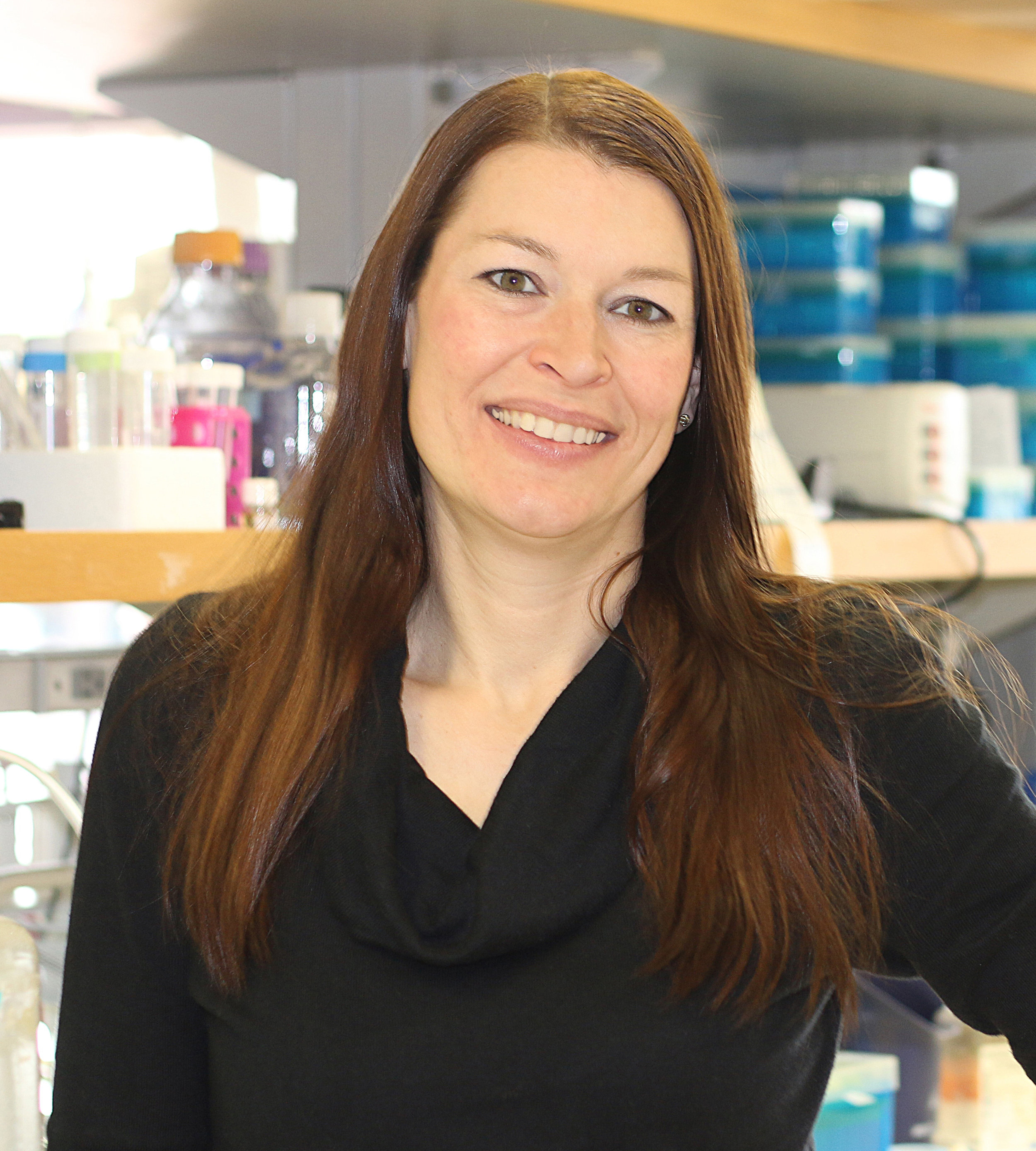
Stanford Diabetes Research Center (SDRC) member Dr. Nadine Nagy has a mission. She wants to stop type 1 diabetes (T1D) before it starts. By the time an individual is diagnosed with T1D, the damage is usually already done. The precious population of insulin producing beta-cells is scattered in tiny clusters, called islets, throughout the pancreas. Islets are tasked with the job of producing the body’s entire supply of insulin. In the setting of T1D which is an autoimmune disease, islets are attacked by the body’s own immune system, leaving the body unable to meet its own insulin demands. But what if there is a way to stop the immune system from launching an attack on the beta-cells in the first place?
Addressing this question and developing tools to prevent T1D forms the foundation of Dr. Nagy’s research at Stanford. In 2015, she and her mentor Dr. Paul Bollyky showed that a drug called Hymecromone or 4-methylumbelliferone (4-MU) protects beta-cells from autoimmune destruction by reducing the synthesis of hyaluronan in a mouse model of T1D. Hyaluronan is a major component of the extracellular matrix (ECM), a supportive structure, found in all tissues. Interestingly, hyaluronan is massively upregulated in disease, and it seems to be a supporting factor for rogue immune cells to destroy pancreatic beta-cells in T1D. Thus, an immune-mediated attack on the beta-cells may be averted by inhibiting hyaluronan production.
“I was always fascinated by the diverse structure and function of the ECM and especially hyaluronan, a simple molecule which has a major impact in disease. We realized early on that there are massive changes in the ECM that precede the onset of diabetes and that disease prevention is a real possibility” says Dr. Nagy.
Dr. Nagy and her colleagues observed for the first time a build-up of hyaluronan in the pancreatic tissues of younger T1D donors obtained from the Network of Pancreatic Organ Donors (nPOD), who had the disease for less than 5 years. In the years following this discovery, Dr. Nagy used mouse models that spontaneously developed T1D to prove her hypothesis that the presence of hyaluronan was essential in facilitating the immune system to mount an attack on the pancreatic beta-cells. Her work revealed that hyaluronan impairs the induction of a class of immune cells called regulatory T cells or Tregs which restrain another group of immune cells called cytotoxic T cells from killing healthy pancreatic beta cells.
Dr. Nagy found that 4-MU treatment spared the beta-cells from destruction by inhibiting hyaluronan synthesis and allowing T-regs to control the aggressive cytotoxic T-cells. As a potential early therapeutic intervention for T1D, 4-MU tips the balance between tolerance and destruction by using the body’s own immune system to control the progression of the disease.
In 2016, Dr. Nagy was awarded a pilot and feasibility award from the SDRC to develop 4-MU analogs to pursue her goal of preventing T1D. The grant enabled her to publish her findings on hyaluronan’s role in autoimmunity and inflammation, making a strong case for pursuing 4-MU as a potential therapeutic. As a drug, 4-MU has been in clinical use for over 4 decades in European and Asian countries for treating biliary spasms and has an excellent safety profile. However, 4-MU has poor pharmacokinetics, and a low bioavailability, hence low utility as a drug in its current form. Once ingested, 4-MU rapidly breaks down into its metabolites. Dr. Nagy’s recent studies found that 4-MU and its main metabolite 4-MUG exist in equilibrium in the body and that both are capable of inhibiting hyaluronan synthesis.
Dr. Nagy is optimistic about the potential to repurpose 4-MU as a drug to prevent T1D in newly diagnosed or at-risk populations. However, she acknowledges, there is still a lot of work that needs to be done before we see 4-MU in the clinic. “I would like to see our translational work moving forward into clinical trials. I believe using 4-MU has the potential to prevent T1D”, she says.
By
Harini Chakravarthy
Harini Chakravarthy is a science writer for the Stanford Diabetes Research Center.